
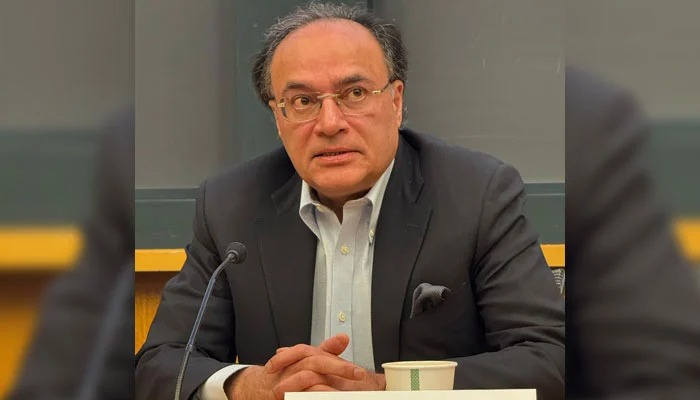
Finance Minister Muhammad Aurangzeb delivered a powerful address at the Pakistan Conference 2025 held at Harvard University, highlighting Pakistan’s emerging economic revival and its ambition to become a regional hub for investment and innovation.
The event, known as the largest student-led conference on Pakistan in the United States, brought together scholars, policymakers, entrepreneurs, and global stakeholders to discuss Pakistan’s economic and governance future.
Aurangzeb presented a data-driven overview of Pakistan’s macroeconomic improvements, stating that the country had “stabilised the fundamentals, restored confidence and reignited growth” after facing severe economic headwinds.
He pointed out that inflation had dropped to 0.7%, the lowest in 60 years, while foreign reserves had doubled. The Pakistani rupee appreciated by 3%, and the current account registered a surplus of over $1 billion in March 2025.
The finance minister emphasized the surge in investor interest, with foreign direct investment increasing by 44% and IT exports growing by 24%. Remittances also reached historic highs, projected at $38 billion for the year.
Aurangzeb noted that Pakistan recorded a fiscal surplus for the first time in 24 years, and its sovereign credit rating was upgraded to B- with a stable outlook by Fitch.
While celebrating these gains, Aurangzeb stressed that achieving stability is only the beginning. He outlined the government’s focus on deep structural reforms in energy, taxation, governance, and the management of state-owned enterprises. He also underscored the importance of fiscal discipline and transparency in all reform initiatives.
Highlighting future growth areas, Aurangzeb said Pakistan’s mineral wealth, expanding tech ecosystem, green energy initiatives, and vibrant youth population offer unparalleled investment opportunities. He noted that the government is prioritizing human capital development as a pillar for sustainable growth.
On debt management, the finance minister shared that Pakistan’s public debt-to-GDP ratio had been reduced from 75% to 67.2%, with a goal to bring it below 60% through prudent fiscal management and enhanced domestic financing. Plans to privatize loss-making state-owned enterprises could save up to 2% of GDP annually.
Aurangzeb also outlined reforms in the financial sector, including the expansion of digital banking, deeper capital markets, and the promotion of green finance. He reaffirmed Pakistan’s commitment to climate resilience, citing partnerships with the IMF’s Resilience and Sustainability Facility (RSF) and the World Bank’s Country Partnership Framework (CPF) as crucial to building climate-resilient infrastructure and agriculture.
Concluding his speech, Aurangzeb stated, “Pakistan’s future will be shaped by bold, necessary choices. By investing in our people, modernising our economy, and staying committed to reform, Pakistan will emerge stronger, greener, and more competitive.”

